


 WhatsApp Business +91 88000 09776
 CSC
CSC  WhatsApp Business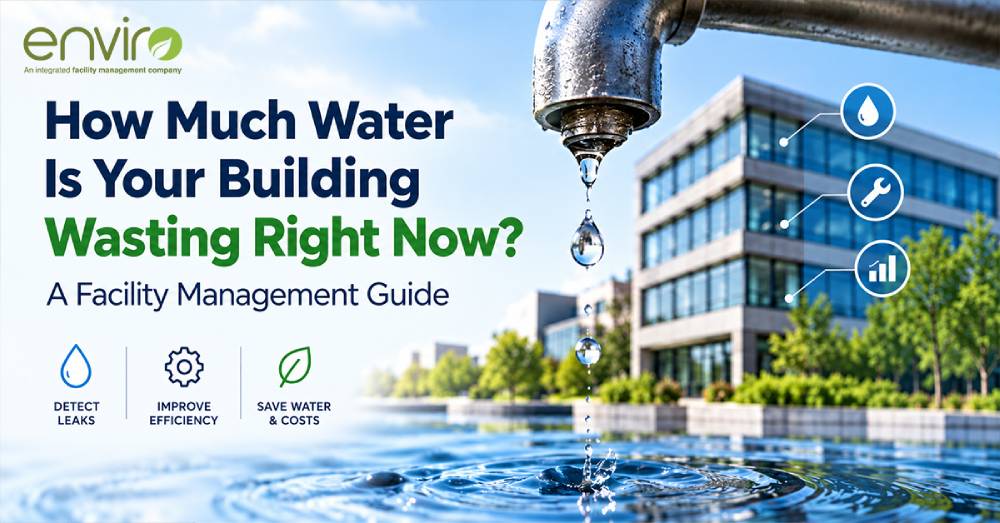
Every day, thousands of litres of water flow is passed on to a single building for drinking, washrooms, landscaping and other daily activities. But have you ever wondered how much water is actually being wasted before it reaches its intended use?
The answer may surprise you.
A dripping tap, a leaking flush tank, an overflowing overhead tank or a hidden pipeline leak may seem like minor issues. But together they may waste thousands of litres of water every week, without anyone even noticing.
Now let me ask you:
. Do you know how much water your building is consuming every day?
. How much of that water is being wasted because of hidden leaks or poor maintenance?
. Could your building be paying for water that no one is actually using?
. Is rainwater being collected by your building or is it flowing away?
. What simple steps can help reduce this hidden water being wasted?
Water wastage is rarely caused by one major problem. It happens through small issues that are ignored. As water demand continues to rise, knowing where water is getting wasted is the first step in prevention of water wastage.
Effective facility management backed by regular building maintenance, can help identify these small issues before they become major sources of water loss.
Where is your building losing water?
An average household uses around 600 litres of water every day.
That means:
. Around 18,000 litres every month
. More than 2 lakh litres every year
Now imagine how much of water is being used in a building with hundreds of people.
The real question right now, is not how much is being used. But, How much of this water is being wasted?
A small leaking tap can waste over 11,000 litres of water in a year if it is not repaired. Now imagine the amount of water that could be lost through hidden pipeline leaks, overflowing water tanks or poor plumbing systems that go un-noticed for months.
Regular building maintenance checks of water-consuming areas help facility management teams catch potential sources of water wastage early.
Top 5 Ways to Reduce Water Wastage:
1. Check for leaks, seepage and dampness regularly:
Not every leak is easy to spot.
Many leaks occur inside walls, under floors or inside pipelines, making it difficult to notice.
The signs that show leakage:
. Damp walls
. Water stains
. Peeling paint
. Seepage
. Dripping tap
. Hidden pipeline leaks
These may look like small problems, but if ignored, they can waste a lot of water and lead to expensive repairs.
Regular building maintenance can help detect such problems early and prevent unnecessary water loss.
2. Keep track of your building water usage:
Most buildings keep an eye on electricity bills and maintenance costs, but very few check how much water they use.
Monitoring your weekly or monthly water consumption can help you spot unusual activities that may be caused by hidden leaks or poor plumbing.
Facility management teams can track meter readings and flag unusual usage patterns before a hidden leak turns into a large bill.
3. Make rainwater harvesting a priority:
In every rainy season, a large amount of rainwater simply flows into drains.
Instead of letting it go to waste, buildings can collect and store rainwater for different purposes.
Rainwater can be used for:
. Watering gardens
. Cleaning common areas
. Toilet flushing
. Vehicle washing
. Other non-drinking purposes
Rainwater harvesting helps reduce the use of fresh water and makes better use of a natural resource that is freely available.
Making rainwater harvesting part of your building management plan is a practical step towards sustainable building management.
4. Help recharge the groundwater table:
Groundwater is one of the main sources of water for many buildings.
But because of growing cities and increasing water use, groundwater levels are falling in many areas.
Rainwater harvesting helps rainwater go back into the ground, which helps in increasing the groundwater table naturally.
This helps in:
. Improving groundwater levels
. Increasing water levels during dry seasons
. Supporting long-term conservation
Every building can play a major role in protecting our water resources.
5. Don’t ignore regular maintenance:
A Plumbing problem today can become a major water loss tomorrow.
Regular maintenance should include:
. Checking plumbing lines
. Inspecting underground water tanks
. Repairing leaking taps
. Checking pumps
. Replacing damaged pipelines
Regular building maintenance not only saves water but also helps keep the building running smoothly.
Routine inspections and preventive maintenance, planned and scheduled by the facility management team, keep plumbing systems, pumps, tanks and pipelines in good working condition.
Practical steps to reduce water wastage:
Every building can reduce water wastage by following a few simple steps:
. Inspect plumbing systems regularly for leaks and seepage.
. Monitor water usage to identify water loss.
. Implement rain water harvesting.
. Recharge the groundwater table through sustainable practices.
. Repair leaks promptly and keep up regular maintenance.
Together, these practices strengthen building management, helping facility teams monitor water usage, identify maintenance requirements and improve the overall efficiency of the building.
Water is one of our most valuable resources, yet it is often wasted in ways we don’t even notice. Every repaired leak, every drop of rainwater harvested, and every regular maintenance check brings us one step closer to a more water–efficient future.
For facility management teams, building managers and maintenance teams, making water efficiency part of regular building maintenance can create long-term benefits for both the building and the environment.
Because when every drop counts, smart water management is not just good maintenance, it’s a responsibility towards building a more sustainable future.
