


 WhatsApp Business +91 88000 09776
 CSC
CSC  WhatsApp Business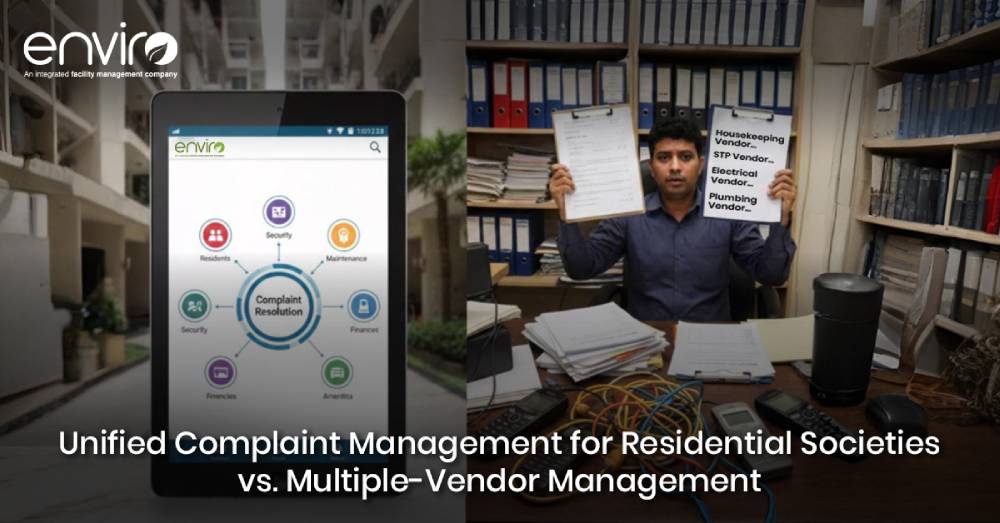
Residential Complaints be it inside their homes or the common areas, is the daily lookout of Facility operations — and how an Integrated Facility Management Services company manage these, governs the resident satisfaction levels leading to perceived professionalism towards the Brand, and justification of the operating costs.
Two common models exist: (A) Unified complaint management under one Facility Manager Agency, and (B) Multiple-vendor management with separate supervisors for each service. Below is a practical comparison and a recommended approach for RWAs and Builders.
Why complaints escalate in the multi-vendor model
When a resident reports a problem (Home seepage, lifts or Lighting etc), different vendors may point fingers: plumbing vendor blames civil, security blames housekeeping, etc. This shirking of responsibility slows resolution and creates repeated escalations. Eventually, after much follow up, once completed, if any follow up is needed, then a new thread of finger pointing begins.
What unified complaint management fixes
A single-agency model ensures a closed-loop resolution process. By consolidating everything from initial intake to final closure under one roof, the workflow remains uninterrupted, eliminating the communication gaps typical of multi-vendor setups. The Benefits include the below:
. One SLA and one escalation matrix (Leading to faster closure) with every step communication
. Transparent dashboards for RWAs and admins. They get access to historical data.
. Consolidated invoicing and performance metrics, helps in better planning and gives a clearer picture of overall site operations.
Practical tech stack for a unified approach
. A Resident/employee app + WhatsApp integration for intake of complaints and communications.
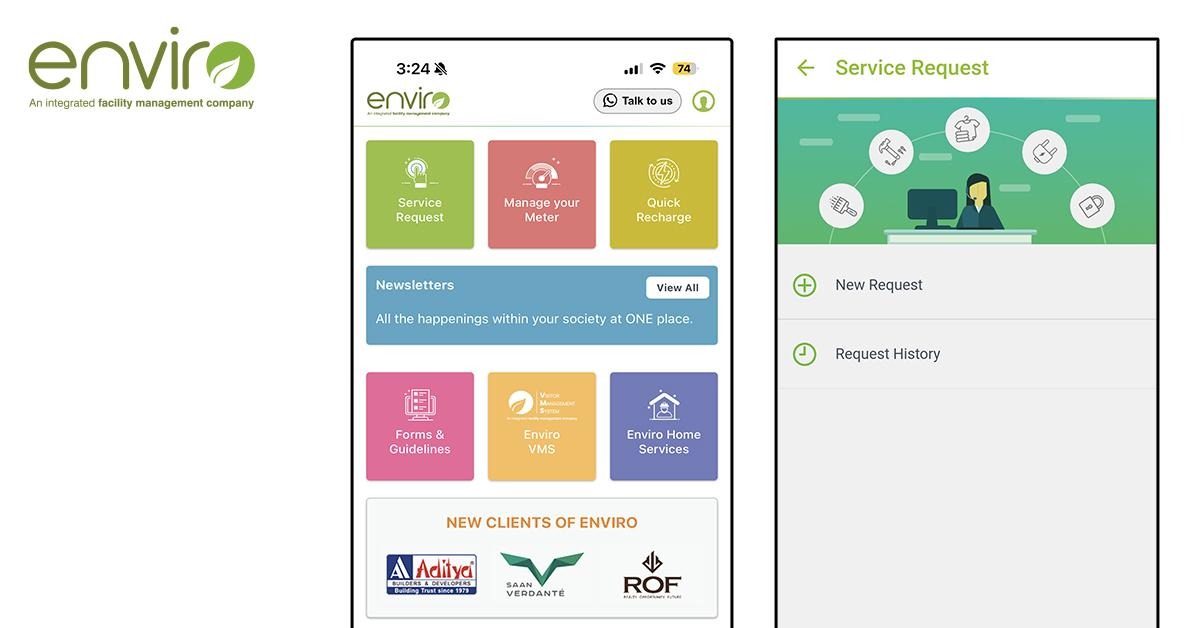
. CMMS / CAFM to log asset details and AMCs (warranty/AMC status). One click tells the RWA/ Admin, the dates, money spent and time frames. Helps in taking informed decisions.
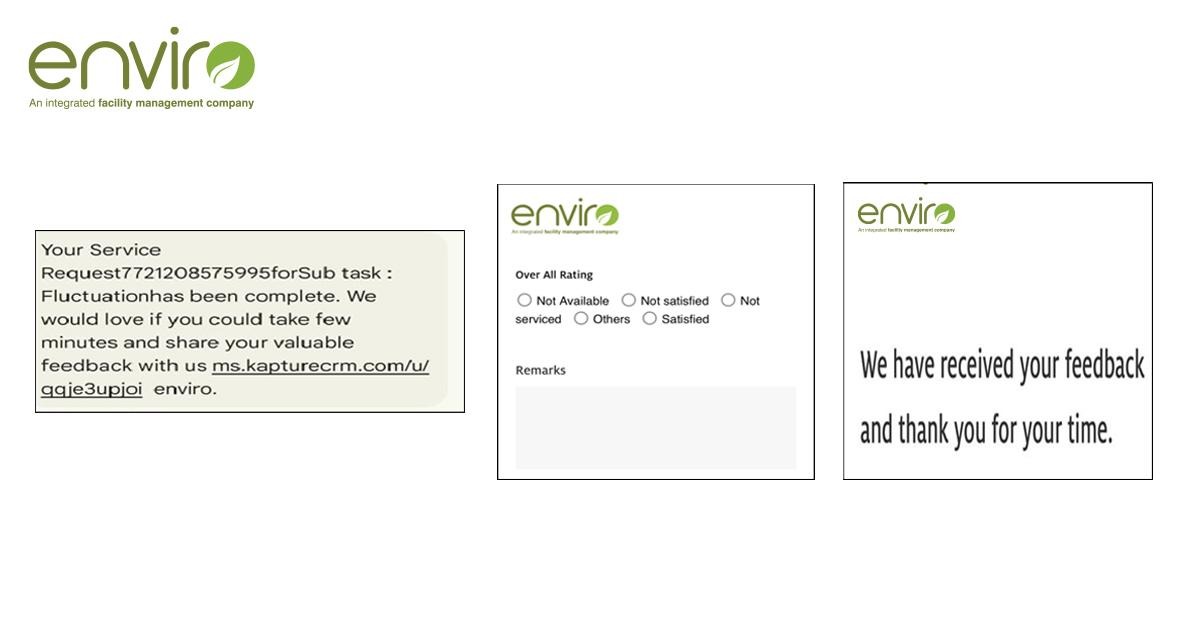
. Workflow automation to route category-specific jobs to the right skillset of employees with clear TAT and responsibility for closure. Enviro goes a step ahead and ask for Feedback after a complaint closure.
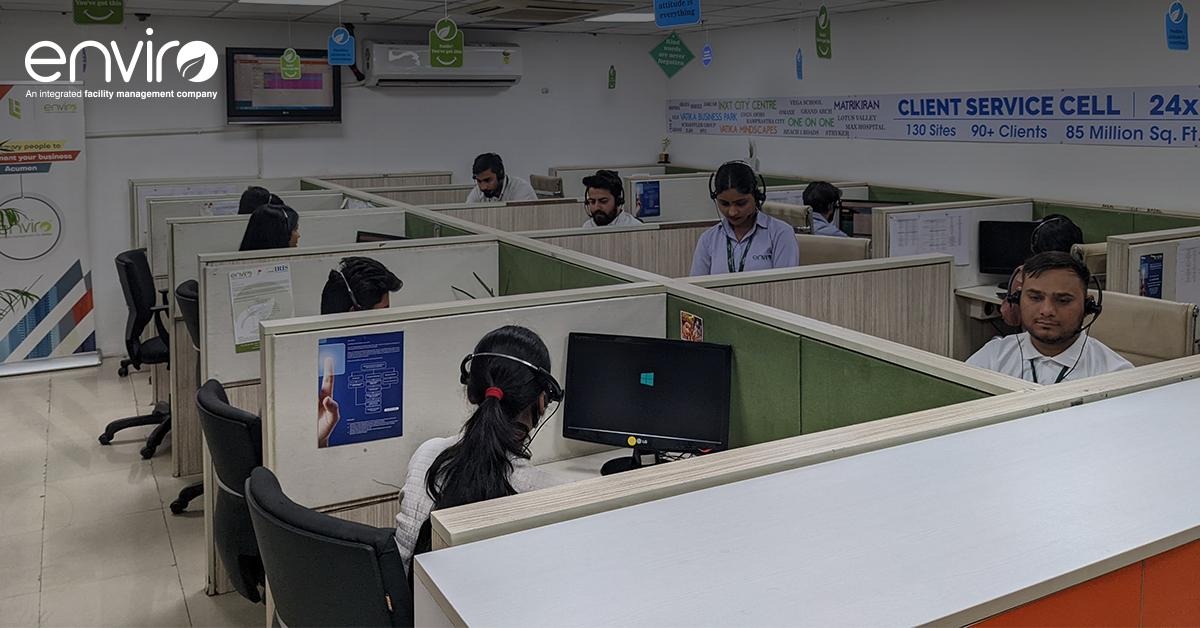
. 24×7 triage (chatbot + night-shift Call availability) to prioritize safety and complaint. This becomes a critical point during peak summers or stretched out electricity outages.
When multiple vendors still make sense (and how to manage them) for large Commercial Blocks
Large campuses with in-house specialist teams / SME Teams (e.g., HVAC OEM contracts) may still need separate vendors. In that case, the Facility Head/admin should:
. Use a central ticketing hub that pushes tasks to each vendor with pre-defined SLAs, This is an additional Tech cost with no direct relevance.
. Assign a single “coordination owner” (FM coordinator) to close the loop. The onus falls squarely on the FM manager, If He/ She goes on leave or changes the job, there is no documentation on ground and the multiple vendors may misuse the same.
. Run a weekly vendor performance review using data from the ticketing system for all functions. Again time taking.
Best Use Case for Indian Societies & OfficesIt is ideal to move to an Integrated Facility Management model where one FM manager accepts accountability. Additionally the agency SME team can hand hold in downtimes or emergency. The manpower + Technical FM softwares with years of experience help in reducing friction among teams and increase quality control and adherence to SLA.
