


 WhatsApp Business +91 88000 09776
 CSC
CSC  WhatsApp Business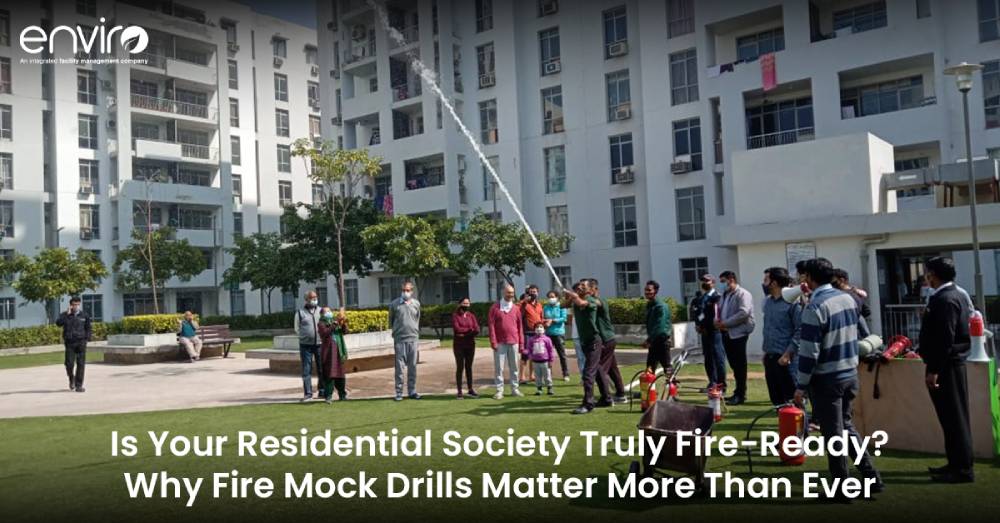
Ask residents in most high-rise societies one simple question: “What would you do if a fire alarm suddenly went off right now?”
In many buildings, the answer is silence. People may know where the lift is.
Very few know:
. The nearest fire exit
. Where extinguishers are located or how to use one
. Which staircase to use
. Where the assembly point is
. What to do during smoke spread
That lack of preparedness becomes dangerous during a real emergency. Across Indian cities, residential towers are growing taller and denser every year. But fire preparedness in many societies still remains alarmingly weak. And that is exactly why fire mock drills are no longer optional.
Why Fire Drills Matter So Much in High-Rise Buildings
During an actual fire, panic spreads faster than flames.
People rush towards the lift, without thinking that lift or elevators should never be used in case of fire. While exiting the floor or building, awareness is necessary, as to where to go. One may find some people to have frozen with fear and should help or guide them to safety. One of the most common reactions, is to, gather the immediate belongings and wasting precious time. Most importantly, do not crowd the exits. Move up or down the staircase in an organised manner.
Most injuries during building fires happen because residents are unprepared — not because fire systems have completely failed.
A proper fire drill changes that. It creates familiarity, confidence, and muscle memory.
Residents learn:
. Which route to take
. How alarms sound
. Where to assemble
. How to help elderly occupants
. What not to do during evacuation
And when people already know the process, panic reduces dramatically.
What Indian Fire Safety Regulations Say
Many RWAs assume fire drills are optional awareness activities. They are not.
The National Building Code (NBC) includes clear fire and life safety guidelines for high-rise buildings, including evacuation preparedness and periodic drills.
State fire departments also expect societies to maintain:
. Functional fire alarms on each floor
. Sprinkler systems on each floor, including basements
. Hose reels on each floor and outside buildings
. Emergency lighting or glow in dark signage
. Accessible exits highlighted in neon colours
. Fire NOCs should be prominently displayed at RWA office and Management office.
Unfortunately, many RWA or Maintenance companies conduct paperwork compliance without conducting actual preparedness exercises involving residents.
This gap becomes visible only during emergencies or actual scenarios.
Common Problems Found During Fire Drills
Professional FM teams often discover serious issues during drills, including:
. Locked fire exits by residents or RWA’s
. Non-functional emergency lights on floors or basement
. Obstructed staircases with cycles or shoe racks air other items
. Faulty or missing alarms
. Low hydrant pressure
. Residents unaware of the assembly points
Without drills, these problems may remain unnoticed for years.
Why Residents Need MOCK Drills?
Reading safety instructions on a notice board is not enough. In a real emergency:
. Smoke reduces visibility and sense of direction also goes missing.
. Stress affects judgment of all, confusion prevails
. Corridors become crowded with all wanting to get down first. Which may lead to stampede also.
. Communication becomes difficult
People respond better to situations they have physically practiced before.
Even a single annual mock drill can improve evacuation response significantly.
What a Proper Fire Mock Drill Looks Like
Before the Drill
The Preparation usually begins weeks in advance. With FM team informing the RWA and residents alike and pushing for maximum participation.
The FM team typically:
. Tests fire the systems first
. Checks alarms and detectors on each floor and basement too
. Inspects emergency lighting for each floor
. Verifies the hydrant pressure all across the property
. Shares the communication with all residents for the date and time, when the mock drill will be done.
Proper planning prevents confusion during the exercise.
During the Drill
A realistic fire drill includes:
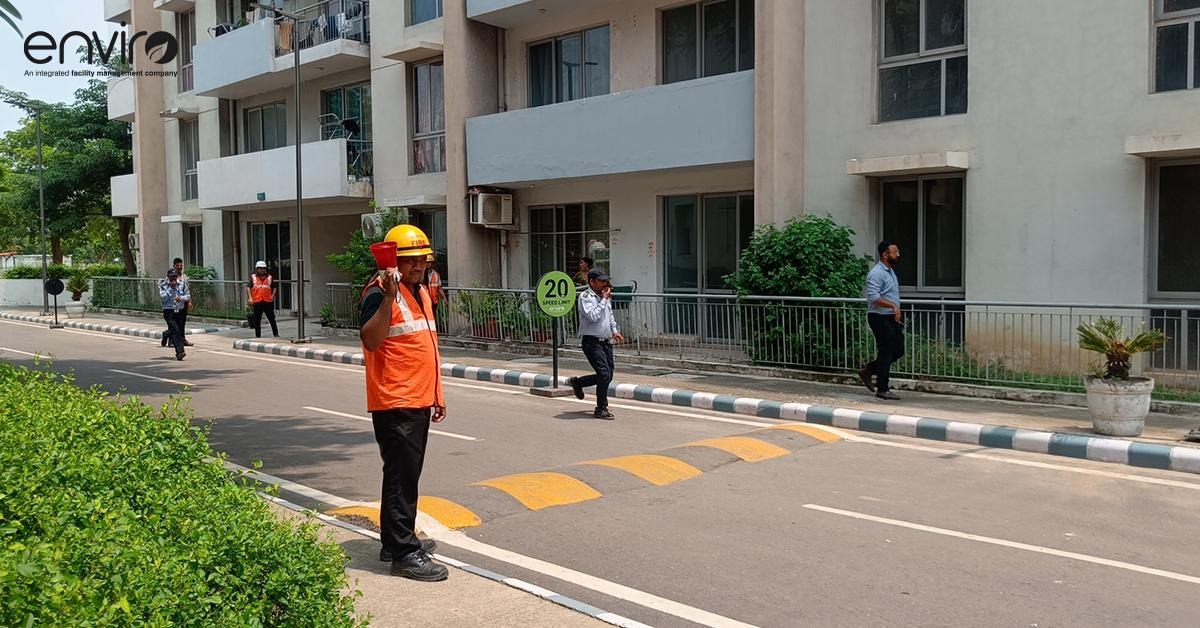
. Alarm activation for all floors
. Lift shutdown testing, so that residents can take the staircase and are aware of the path to be taken.
. Staircase evacuation all the way to assembly point
. Emergency rescue practice for senior citizens and handicapped residents.
. Assembly point management by prominently displayed signage
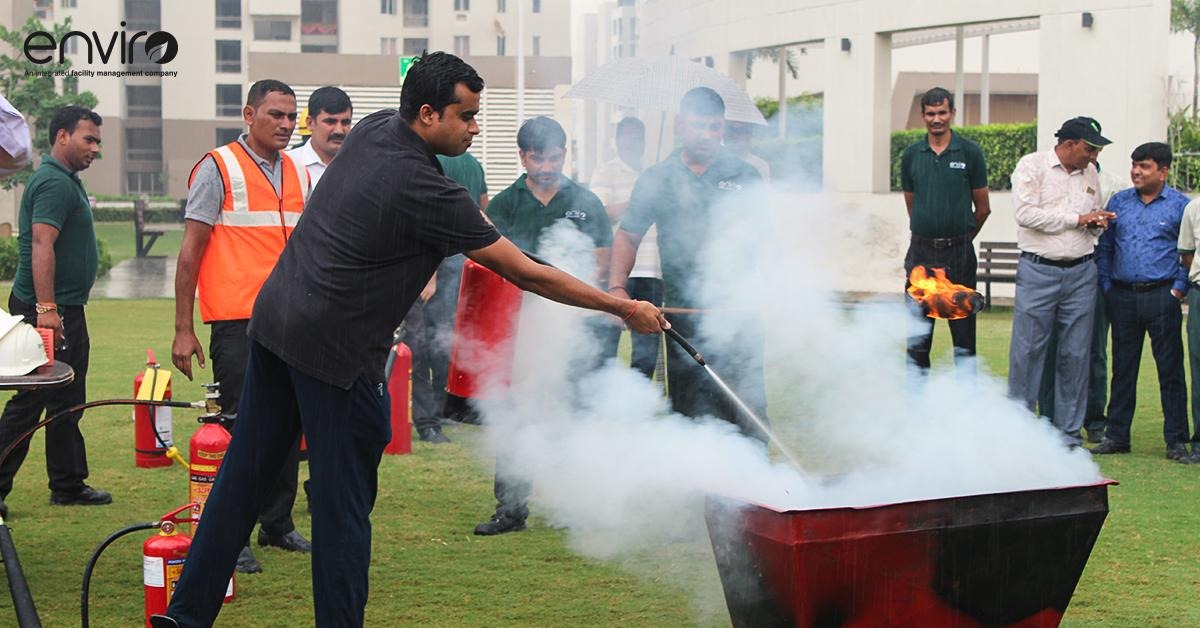
Many societies also include live fire extinguisher demonstrations so residents learn basic handling techniques.
Even simple awareness around extinguisher usage can make a major difference during early-stage fires.
After the Drill
The most important part of the exercise is the review process.
The FM and RWA teams should evaluate on what was the response time, what were the concern areas or areas where more coordination or material is needed. Residents participation matters, as during day time, mostly House wives, children and Senior citizens are home, of that how many participated. Identify the staircase obstruction points, be it cycle or cupboards. Identify if the alarms, emergency lighting all worked where required.
How Professional FM Teams Support Fire Safety
An integrated FM partner helps societies manage:
. The Fire equipment inspections are regularly done with a card hanging around the neck to jot down the date of inspection. It can also mention the expiry date.
. Alarm testing though external checking and sound ding it once a month.
. The water pressure at Hydrant point should be checked and fire line should be charged.
. The local fire tender unit, numbers should be readily available with RWA and FM team.
. Security Guards should be given basic training as they will be the first responder.
. Mock drill execution calendar and post drill pictures to be shared with residents.
A Digital tracking systems helps maintain compliance records and maintenance history for audits and inspections.
Practical Fire Safety Tips for Residents
Every resident should be aware of the nearest staircase to go down. Be aware how the Fire alarm sounds, so that there is a situational awareness.
. The nearest Assembly point location
. Emergency contact numbers of Fire station, Hospitals and such
. Basic extinguisher handling.
Residents should also avoid:
. Blocking staircases with house hold items
. Storing items in fire exits or locking the exit doors
. Tampering with detectors or alarms
. Using lifts during fire alarms
Small habits improve collective safety enormously.
To mitigate chaos and control evacuation, It often comes down to one thing — whether residents already know what to do and where to go.
Fire drills may seem inconvenient for one morning. But during a real emergency, that preparation can save lives.
